Blog Image

Letters from 68 degrees, Kiruna

Blog at 68 degrees

What's happening here at 68 degrees, a bed and breakfast in Kiruna.

web page: www.68degrees.se

A time for thumb twiddling

Here at 68 degrees Posted on Wed, November 28, 2018 15:55:51

We are often away in the summer, returning for short periods to scythe the grass and use the hammock. It’s beautiful here in the summer, if you’re a mosquito. This summer, with the heatwave across Europe, even Kiruna experienced warm temperatures, and mosquitos were in short supply. At one point I even swam in a lake in the fjäll. But that’s another story.

Now the winter season is here (at least, one of them: there are four, according to local traditions). And yet, still no snow.

We’re not complaining. Usually at this time we return after a lengthy absence to face several days of digging the car out of the garage. This year things happened much faster, so after a brief period of reconnections and sniffing around to see what was what, we were putting our feet up in front of the fire, twiddling our thumbs and wondering what to do next.

Enjoy, I say. The snow will come soon enough and then there will be no time for thumb twiddling.


Of course we like it

Here at 68 degrees Posted on Tue, April 17, 2018 21:31:53

The snow’s still here, but each step is like walking on pork scratchings. Mounds of soft white fluff have become crackling towers, and in town, very brown ones. It’s spring, and while to most other parts of the world that means greenery and flowers, here it means masses of light, and pork scratchings.

Not that we don’t like it. Of course we like it. After months of winter, and darkness (at least some of the time), we’re ready for a change. Sort of. We love the warmth, and the long bright days sitting out on the lake, face turned to the sun. It’s just that – it’s very very bright, that sun, reflected off all these white pork scratchings. Almost blinding in fact – we’re blinking like albino ferrets out of captivity, wondering what happens next.

The spring is welcome, but it’s demanding. ‘Spring tiredness’ they call it. Too much stimulation, like a sort of reverse jet lag. No chance now of seeing aurora – the sky is light all night. The light tells us to stay awake for many many hours but increasingly those hours all look the same. Just endless light, the sun slowly coming into an almost horizontal orbit, circling overhead, no highs or lows, no sunrises and sunsets.

There’s a slight resistance in the body, a digging in of the heels, a trying to slow the acceleration to the light. You see nature’s resistance to spring all around you; not only in thick ice on all the lakes but also in ‘skare’, snow like pork scratchings. Water and snow, usually so soft, so giving, so in tune with the flow, now has a hard, brittle surface. When you meet its resistance with force, it shatters like shards of glass.

Soon we’ll let go and give in to the thaw, but for now we enjoy our picnic on the lake in the warm sun, with no mosquitoes to bother us.


Jazz Thinking

Here at 68 degrees Posted on Mon, March 19, 2018 17:44:24

No-one can say that people in Kiruna make a fuss. The town is falling into a pit and no-one complains. It’s a less well known fact that the local council could have stopped the mine but they chose not to.

What makes people so tolerant? We’ve wondered about this over the years. There’s an acceptance of change beyond anything we’ve experienced anywhere else. What could be the reason?

For one thing, the natural environment provides endless practice at dealing with change. Living here you have to adapt to rapid seasonal changes, total darkness to total light, a landscape that seems frozen and dead, changing to a landscape that’s rampant with vegetation and wildlife. Sami people say there are eight seasons here, not four.

Then there’s simply the impact of living in Kiruna – a town constantly having to adapt to the demands of the mine. People come to expect some destruction, see it as part of the natural process of life. In the ’60s people lost forever the streets and buildings of their childhood when a large area of town became unstable. That community then settled in other areas, knowing the process would probably be repeated during their lives.

We all know life is about change and yet in many places, including where I’m from, we spend a lot of time and energy trying to deny it, seeking out ‘security’, ‘roots’, and the comfort of a familiar home environment. ‘Our home is our castle’ and we dig ourselves in, reassured by the familiar. When someone tries to change that – redevelop our street, build a kitchen extension in our view, knock down an old cinema and replace it with a shopping centre – we object, we get stressed and angry, and when we can’t prevent it we find it hard, mentally, to move on.

In Kiruna expectations are quite different. People seem to know that it’s pointless looking for that sort of security. But there’s something else going on here as well, a particular adaptation in people that I’ve observed – and even experienced for myself – which perhaps explains how Kiruna people cope. I call it, ‘Jazz Thinking’.

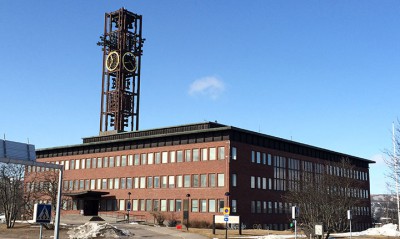
To explain this, I’ll tell you how I feel about the town hall. Kiruna’s town hall is one of my favourite buildings and it has also been one of Sweden’s most valued buildings, with a cultural protection marker on it. This year, however, destabilised by the mine, it will be demolished. It’s a crime, I think, to destroy such a wonderful building, and it makes me very sad to think of losing it.

Late last year, in preparation for the coming demolition, the council removed the building’s remarkable clock tower and erected it at the site of the new town hall. The exterior of the old town hall building has always been rather unexceptional, apart from this tower, so now the tower is gone, the building, on the face of it, looks just like a giant brick bus stop.

Except that a weird thing happens when I look at it.

I can still see the tower!

In jazz an instrument probably isn’t playing the tune – it’s improvising around a melody or a rhythm which you have heard before. As you listen you hear the original tune in your head when the improvised version is played for you. The two things work together – your memory of the music, and the musician’s version of it.

This is what happens when I look at the town hall. I see the damaged building in front of me, and yet at the same time the town hall as it used to be – with its clock tower still in place – keeps playing in my head.

Though sometimes it isn’t just in my head. When we came back to Kiruna after some time away last year, we found that several of the old buildings were now in a completely different part of town. You look at them – the old wooden building where the mine’s first Director once lived, for instance – and it is so familiar, and yet, not. It’s in the wrong place! A building from 1910, in a part of town where no-one lived in 1910.

There’s a short film running in the background. Buildings move effortlessly about the town, looking for a home. When you turn your back on them, they’re scooting off round the corner searching for a better outlook. A clock tower floats off down the road to move to another site, another building, and attaches itself in an instant. A whole street relocates – vanishing quite suddenly.

We’ve noticed local townspeople often refer to places and buildings by what used to be there, which can be very confusing for newcomers. So when you’re told something will take place ‘at the old supermarket’, or ‘the old fish factory’ you can feel a bit irritated, not knowing anything about these places. But now I see that this is just a way of keeping the old buildings and memories alive.

They can knock down buildings but they can’t change shared memories and visions. The collective virtual reality of Kiruna is always playing in the background. Passing the site of Kiruna’s original station, I smile to see its majestic brick exterior still towering over me. ‘Jazz Thinking’ – it’s magic.


‘Humans of Kiruna’

Here at 68 degrees Posted on Sun, February 11, 2018 16:57:38

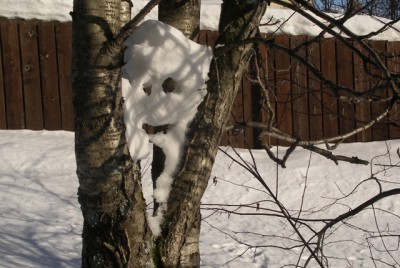
I don’t believe in aliens or UFO from outer space – though if I did, Kiruna is a good place to be. Someone claimed to have spotted one here in 2006. Here it is:

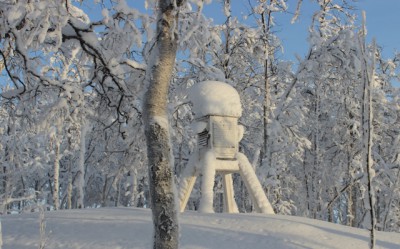
An alien of a kind might appear in the garden too. It’s easy to see something unnatural and out of this world in the weirder effects of nature in this climate.

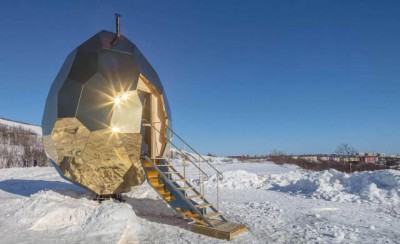
There’s plenty here that one can think came from outer space. There’s a rocket launching site nearby, so we’re closer to space travel than most. It’s not unusual for spacecraft to appear in the landscape.


Kiruna was early on identified as the best place in Europe for commercial passenger flights into space because we have ’empty air’ in the skies above and empty land beneath it. Who knows what plans they’re hatching or how far they’ve got with this. Perhaps they’ve already reached Mars and brought back some helpers.

Funny that, because only this week we had a scientist staying with us from Texas who described himself as an expert on Mars.

The periods of dark and light this far north can mess with your head. Anything seems possible. Indeed, as Kiruna begins to be destroyed and no reasonable alternative presents itself, we look to wilder ideas for inspiration and help.

It’s hard to see how the local council’s current plans will solve all the problems of the town disappearing, but maybe they have other plans up their sleeve and are just waiting for the right moment to reveal them.

At this year’s ‘Winter Festival’ the highlight of the weekend was a showing of the film ‘E.T.’ I must have been the only person over five years old that hadn’t seen it before. A strange choice of film, you might think, but this is a strange place.

There was an idea a few years ago that people might be sent to Mars to live. Now if that project could persuade some Kiruna people to volunteer then maybe it would help our housing crisis. The landscapes aren’t too dissimilar after all, and Kiruna people are used to living in extreme conditions.

I’ve started wondering about the local council – they’re looking disaster in the face and yet they’re so very, very calm. Unnaturally calm. So calm, one wonders – are they human?

This weekend we were in the town hall listening to the council leader describing Kiruna’s future. Not a glimmer of doubt crossed his smooth, round face. He was totally confident that things would happen, four hotels would establish themselves with luxury gym and conference facilities, shops and offices and blocks of flats would all be built, and the railway line would appear again on the town’s doorstep.

From the perspective of us earthlings all this is looking very unlikely. But the council, probably know better, perhaps because most of them come from another planet, are a species of higher intelligence, and have help available to them from across the universe.

As if to prove my theory, this weekend in the town hall they organised an exhibition about local people and they called it ‘Humans of Kiruna’. Because to them, it seems, those of us who live here and worry about the future of the town are another species.


We’ve seen it all before

Here at 68 degrees Posted on Fri, February 09, 2018 19:09:47

I wouldn’t call Kiruna people cynical exactly, but there is a touch of world-weary acceptance in their approach to life. They’re so calm about losing their town to mine subsidence – why aren’t they protesting? The reason is, it’s nothing new; parts of Kiruna have collapsed before. Some people were brought up in an area that no longer exists – wiped out of existence, not a trace left of those houses, streets, shops. The current having-to-move-the-town commotion is nothing new for Kiruna, it’s business as usual.

So it is with most things, we find, the longer we live here. We’ve had a tendency to get a bit hot under the collar about some developments in town, and been disappointed in the lack of reaction or protest from local people. Why don’t they care?

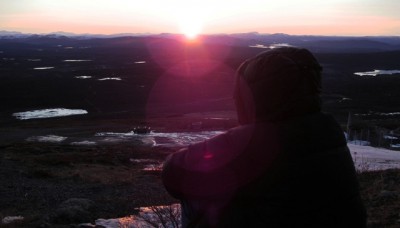
As a case study, lets take one of our favourite places, the hill or mountain of Luossavaara in town. It used to be mine, but for a very long time now it’s been the town’s downhill skiing slope. In the summer it’s a brilliant place to climb at night – you can see the midnight sun from there for weeks, and the view out to the fjäll is magnificent.

During some part of the year you can drive some of the way up, but other times – when snow isn’t cleared – you have to walk. It’s challenging to get there, but there’s plenty of reward at the top.

Then ten years ago, when the local politicians started having visions about the Kiruna of the future – the town to be that the mine would pay for when they took away our old one – the visions that have turned out to be dreams with no link to reality – during that time, someone had a ‘clever’ idea. We need more hotels, they thought, and there’s a nice view from the top of that mountain – why don’t we build a hotel there? Then they had an even ‘cleverer’ idea – what’s great about there is the midnight sun, so this hotel will be just great for people who want to come to Kiruna to see it.

Our first reaction was, who wants a hotel where the sun will shine straight through your bedroom window all night and keep you awake?

But that aside, what really concerned us was, if they build a hotel there then it will be out of bounds for non-paying guests, covered in concrete and car parks, and no longer a wonderful viewing place for locals. We thought it was a terrible idea, destroying one of Kiruna’s great attractions. While the council were trying to encourage tourism, they were also planning to kill the goose that was laying the golden eggs.

We didn’t hear anyone protesting. The politicians thought it was a wonderful idea, and local people were, as usual, silent. What about the destruction of their viewing place, didn’t they care? Did they like the idea or hate it? Hard to say.

The company that had come up with this idea in the first place quickly got the go-ahead and work began. We read they didn’t yet have all the finance in place, but they had enough to start the work, and there were already reports in the local press of how wonderful it would be when it was finished. Tons of concrete were dragged up Luossavaara. Lorries and machines working all spring and early summer. The foundations were laid, and the shell of the hotel went up. The rest of the concrete blocks for building the hotel were stored on the road leading there, piled up next to the walking and skiing paths.
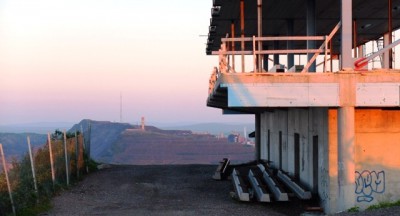
That summer things slowed down. Workers, we assumed, were on holiday. From all over town we saw the concrete shell, an eyesore in a prime beauty spot. It looked sad.

Then there was the Kiruna Festival, and the town filled up with party goers. Locals and visitors alike flocked to the town square and to any viewing point around – which traditionally had always included the top of Luossavaara. We were there too.

There was a glorious moment of mass trespass that day, when, frustrated by the lack of space and looking at the flimsy barriers around the concrete shell, the amiable crowd flooded into the concrete shell and reclaimed the view.

Summer passed, but still no sign of work on the hotel. We guessed that the company building it had failed to raise the money necessary to continue. Local papers discussed the problem, and suggested ways for them to raise the money. And still no-one complained.

Rumours began to spread, and some of these were later confirmed. It wasn’t just a problem of finance. It turned out that the land on Luossavaara is owned by the State, and the company didn’t have permission to build there at all. The council had turned a blind eye to this, but the State wouldn’t.

A whole year, and then another, passed, and during this time the huge piles of concrete material left lying around by the builders began to rot by the road.

At one point, during the years after this when nothing happened, the local council asked us not to litter on Luossavaara. Not to litter?! When there were all those blocks of rotting concrete blocking the views?! You’d have thought that the company responsible would have been required to remove its debris. But still no-one complained.

Well actually, we did – and the council replied that the concrete blocks would be removed, sometime…

The light at the end of the tunnel was when, inexplicably (at the time) the local mining company, LKAB, agreed to take responsibility for the shell and come up with a plan for it. We knew then that the concrete debris would finally be removed, and it was.

Fast forward another two years. The concrete shell is still there, the debris has gone. LKAB has moved some of Kiruna’s old buildings to the land at the foot of Luossavaara and is planning on building flats there. The local council are still talking about the new Kiruna on the other side of town, but all eyes are turned in another direction, here to Luossavaara.

They can’t talk about the new Kiruna, which still isn’t built, but as elections approach local politicians have arranged for a new ski-lift to be installed on Luossavaara. A strange priority, you might think, especially with its capacity of moving 2400 people an hour, which is probably more than we get in a week visiting Kiruna. But they’re looking to the future, they say, and they’re also thinking of plans for the top of Luossavaara….

They aren’t sure what LKAB have in mind, but they’re thinking of developing the area as a viewing spot.
A game for 50 players

Here at 68 degrees Posted on Tue, February 06, 2018 21:41:18

People like ruins, against all logic. A broken down old building, in the right setting, can attract millions of visitors. Angkor Wat, Stonehenge, the Colosseum, Machu Pichu. Or on a smaller scale, old churches and abbeys, ruined monasteries, remains of medieval hospitals and chapels.

On the other hand, deteriorating buildings create slums. We don’t like areas where houses aren’t maintained, where cold and wet gets into buildings and pulls them apart.

So what makes some kinds of deterioration attractive and not others? At what point does a run-down old building become a romantic ruin?

In Kiruna we’re unlikely to find out. Although most of the town will eventually be affected by subsidence, the local mine’s policy is to knock down any buildings before they show signs of deterioration. Buildings are either lived in, in good working order, or they’re gone.

When you think about it, this must be a hard goal to achieve. There needs to be negotiation with the owner and purchase of the building in a reasonable timescale. In addition, not everyone in a street will necessarily sell up at the same time. In some cases houses will become available for the mine to purchase from as soon as the offer is made, while others may take a year or two. No-one wants to live in a street of deteriorating empty houses, and the mine doesn’t want us to see them. An empty house down the road would be a large sign saying, ‘Subsidence coming your way sometime soon’. We all know it is, but there’s a difference between knowing, and seeing.

So there’s a good game to be had in town right now; let’s call it ‘Pit Stop’. In this game, for 2 to 50 players, you walk down a Kiruna street and try and work out how close the street is to the advancing pit (the one we will all eventually fall into).

The rules of this game are that you’re allowed to use the mine’s own map as guidance. Online you can see areas marked and when you click on them it will tell you when the mine will start to buy them – roughly that is, give or take a year.

So here’s your street. You know it’s a likely area because these are all nice old wooden houses, probably from the ’20s, and large most of them. When you look closer they have more than one door, so that’ll be worker housing – a house divided into flats – very likely to be near the encroaching pit.

Other than that, what clues are there? This is no ghost town – there are people around, some cars in the street, some signs of life. Two kids pass by, home from school. Rubbish bins are buried in snow. Post boxes outside houses have names. And yet, it’s very quiet. Look a bit more closely.

There’s been a lot of snow this winter; it piles up everywhere around the houses. But that house over there – isn’t there more snow there than round the others? Look a bit more closely and an entrance way is completely blocked. Not lived in then?

But wait a minute… it has another entrance, so that doesn’t prove anything. There’s the other entrance, and the steps have all been cleared of snow, so, you think, someone must live there. Leaning against the stairs is a brightly painted rainbow broom. The outdoor light is on. Signs of life.

And yet, the curtains seem to be drawn..

Further down the road are other houses with rainbow coloured brooms, the steps to their entrances also neatly cleared of snow, the windows obscured by blinds or net curtains. We begin to see the pattern. Rainbow brooms, lights on, cleared snow, but no real sign of life… ‘Pit Stop!’ you call, waving your cards triumphantly in the air.

One day, a fence will appear around them, and then the next week, they’ll be gone. Not a trace left – just snow on the ground.

I long for some decent ruins – something to say decay and deterioration, disrepair and destruction. It’s not natural forces that will take down these buildings, though the force of subsiding ground is a kind of elemental force. They’ll be knocked down by bulldozers before they fall. But before they go, while they’re still pretending to be lived in, nature begins to run her course.

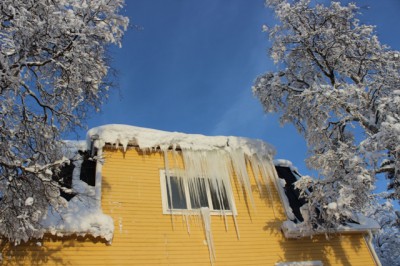
Icicles are a sure sign. Where they form, warm air is escaping from a broken building, and no-one lives with that in these temperatures. But why the warm air, in an abandoned building? Perhaps they mining company are not only clearing the steps of snow but having to heat it too, for fear of trapped water freezing and cracking pipes. Whatever the reason, the icicles, and the abandonment they demonstrate, are, in some strange way, beautiful.


Kiruna shows it has a sense of humour

Here at 68 degrees Posted on Sun, January 28, 2018 22:13:26

This week was Kiruna’s annual ‘Snow Festival’, and as usual nature had obliged by delivering quite a lot of the stuff over the last couple of months.

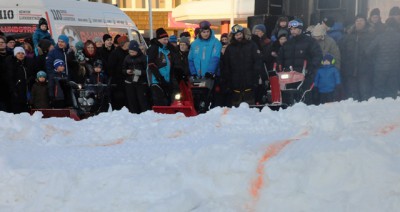
However, while visitors are attracted to Kiruna and its festival by the main ingredient – snow – as has been noted here before, Kiruna’s primary focus is on removing it. Is it a touch ironic that a race between snow clearing machines is the highlight of a ‘Snow Festival’?

Yes all you lovely people, do come here and enjoy our wonderful snow, but all we really care about by this time of year (it’s been falling now since the beginning of November) is how to get rid of the damn stuff. Well it’s honest at least.

Visitors clearly found it amusing but mainly because of the incongruity of a race between small machinery, and the fact that ‘race’ hardly describes the feeling of a snow clearing machine which can only move at the pace of a snail.

So what else draws visitors from far and wide? Oh that wonderful magical sparkling feeling of lights on snow-covered trees set against starry skies. That feeling of midwinter that is so hard to experience at most latitudes these days but is guaranteed in Kiruna. It’s only January after all – and there’s a mass of snow, so to any visitor, this is clearly the land of midwinter dreams.

But no, the week before the Snow Festival, Kiruna decided that midwinter is well and truly over (for heaven’s sake, we have five whole hours of daylight now!) and so they took down all the pretty lighting in the trees around town. So – no magical snowy trees here, it’s spring! Fortunately perhaps, visitors weren’t to know they’d just missed them.

Ha ha! I already had my chuckle face on when I read about two special treats for children this year.

In the town hall there would be an ‘igloo’ where Emma and Samir would tell the story of the local council’s new project, ‘KirunaBo’. One wonders what this ‘project’ might be. It sounds remarkably like the name of a project announcing (yet again) the rebuilding of Kiruna. Perhaps this project proposes that everyone build their own igloo?

The theatre entertainment this year – again for children – would be ‘The Emperor’s New Clothes’, the story of how the Emperor was told he had new clothes and he and everyone else believed it, even though he was naked. Could this refer to the local council’s insistence that they really are building a new Kiruna as they promised (we just can’t see it)?

Meanwhile the other highlight of the ‘Snow Festival’ was nothing to do with snow. It was the opportunity to have a guided tour of the reception area of the new town hall, being built in Kiruna’s new town area, out of town. You also get to meet the local politicians responsible for the fact that not a single other building has yet been built in the area, and even the town hall isn’t finished yet.

Are they having a laugh? What festival visitors would bother with that? Wait a minute – I see they’re offering free coffee and buns. It’ll be packed!


Terracotta army, in white

Here at 68 degrees Posted on Sun, January 21, 2018 22:30:15

The challenges of living in Kiruna can be overstated. However, although you couldn’t claim it was ‘remote’ – we have airport that links us with Stockholm in an hour and a half – living in Kiruna does feel like living in a frontier town.

It isn’t just that within minutes of driving out of town you’re in empty landscape, and not a coffee shop in sight. What’s a minor task for city dwellers further south can be experienced as a significant activity here, or, if things are harder, as an adventure even. Going shopping, even with a shop within a few minutes’ walk, can take an hour – there’s all the putting on of warm layers, clearing the snow away on your way out, trudging down the road and back again, then taking all the layers off. There’s no ‘nipping out to the shops’ here. Not that I’m complaining. Because nothing’s simple, every activity brings with it a certain amount of satisfaction from reaching one’s goal.

A few days’ ago we had to drive south to the nearest town, Gällivare – that’s 120 km (74 miles). Although there had been a lot of snow, it wasn’t snowing during the journey, at least not going there, which made driving a little easier.

We drove through the familiar landscape of trees just south of here, the boreal forest which ends just north and east of Kiruna. The pine trees grow narrow, huddling together for wind protection, their tops reaching out to the light, and their branches kept as close to the trunk as possible. After heavy snowfall each tree has a mass of hanging white pouches, balls of snow pulling the short lateral branches downwards. The loose branch ends curl upwards, frozen in attitudes that look vaguely human – pointing and gesturing. There are so many thousands and millions of these trees in the black and white landscape of winter and they can look slightly unreal. Like legions of creatures from outer space, standing in massive armies, questioning, or maybe threatening.

We drive on. The road is clear enough, and we pass many lorries on the way. Transporting fish in one direction, minerals in another perhaps. We wonder if any of them carry that particular brand of frozen breaded fish that has been missing from our supermarket for the last two weeks.

Half way we stop at a lay-by to drink some coffee. A car or lorry whizzes by every five minutes or so. Otherwise the road leads the eye in both directions, an empty trail between legions of alien trees, disappearing at each end into a white horizon. Our journey so far has taken just over an hour.

Next to the road we see a flash of red, the most well-fed fox you’re ever likely to see. It’s having a disagreement with local crows over some road kill. There’s no doubt who’s going to win (the crows).

Another hour of trees. Each turn of the road leading one to expect something different, but every time providing only a slight variation in hill or road direction. Just trees, and snow. The trees are a kind of terracotta army in white – so many of them, surely they mean something?

It’s not without some relief we reach the outskirts of Gällivare. Suddenly more roads, streets, building even, and people. At the hospital we check in for a routine eye test. Then begins the journey home.


Never Never Land

Here at 68 degrees Posted on Wed, January 17, 2018 13:21:03

We’re used to living in a kind of ‘Never Never Land’. The far north, referred to by its now fictional name of ‘Lappland’, is a dream people have.

We too have a dream – of a new Kiruna. As the old one slowly disappears, ‘Never Never Kiruna’ hovers on the edge of town, a mirage of new flats, shops, pedestrian walkways. At the moment just the new town hall is a reality, but one day, perhaps..

A friend sent us a CD featuring 23 versions of ‘White Christmas’. While ‘I’m dreaming of a White Christmas’ is played over and over again, we watch snow billow around outside the window. This particular dream – a white Christmas – always does come true in Kiruna, but weirdly, while the rest of American-influenced society dreams of it, Kiruna – the home of ‘Never Never Land’ – looks the other way.

A couple of days before Christmas, lorries arrived in all the streets of town to take the snow away. The rest of the world, as above, was dreaming of a white Christmas, but Kiruna was doing it’s best to remove any trace of the possibility. (They failed of course – more snow arrived within a few days.)

For the last few days we’ve experienced blizzard conditions – high winds, lots of snow. We’ve been kept busy, shovelling it away. The snow was no dream – I can see it now, piled up outside the house. And yet…. Sweden’s national weather forecasting service (SMHI) has refused to admit it exists. Thick cloud, yes they admit to that, high winds, those too, but snow – not a trace, they claim. SMHI is dreaming of a snow-free Kiruna.

Is this because for all of us our ‘Never Never Land’ is what we currently don’t have? Or is it just that SMHI haven’t bothered looking out the window?


What’s in a name?

Here at 68 degrees Posted on Sun, January 14, 2018 15:09:07

They’re rather upset here. The Aurora Sky Station (Abisko, Sweden) might get mixed up with the newly-opened and marketed Sky Aurora Station ( Rovaniemi, Finland).

We’re not upset, obviously, but if you’re one of the people making money from the ‘sky station’ you don’t want your customers lured to another one in Finland, all the time believing they’re going to the ‘real’ one here.

Can’t help thinking that the company has been caught by it’s own trick here. Everything seems to be called the arctic adventure aurora trip. If it involves dogs you add ‘sled dogs’ – ditto snowmobiles. Our guests don’t know which company they’re with because it might be the aurora arctic adventure, or the arctic adventure aurora, or even the aurora adventure in the arctic. Something like that anyway. Involves guaranteed (almost) northern lights, tales around the campfire, and the most exciting adventure under the magical northern sky.

When you market things to tourists in a way which ignores the real landscape and environment, and focuses instead on selling a Disney version of the north, then what you’re selling is easily reproduced anywhere.

Take the ice hotel for instance. Now it’s here year round we can all ignore the (interesting) fact that ice melts here in the summer. It’s no longer something special for the arctic and the cold regions of the world. Opening near you soon, an Ice Hotel in Rome, Paris, or in Rio de Janeiro.

And you know what? I have the feeling that an awful lot of tourists really wouldn’t care where in the world it was.

And it’s a fact, that if tourists this year end up at a ‘sky station’ in Finland, when they were really expecting to be in Sweden, they wouldn’t care about that either. What they should perhaps care about, though, is that they never needed to go to a ‘sky station’ at all -it’s an invention for making money out of tourists who haven’t understood that aurora are visible anywhere it’s dark.


Your Town Needs You

Here at 68 degrees Posted on Tue, December 26, 2017 17:37:33

Kiruna being quite far away from most other places in Sweden – did you know if you turn Sweden round 180 degrees on its toe it reaches as far as Rome? – when people come home for Christmas they usually stay for more than a night. These are Hemvändare – ‘Home returners’ – and they’re easy to spot around town.

They walk around in noisy gangs, meeting up with old school friends and reliving their wild teenage years. Couples wear slightly matching winter clothing, and they look cold. In cars they never stop to let people cross the road, and in shops they stand a bit too close to you in the queue and talk loudly in your ear. To keep them out of mischief friendly sports matches are arranged in town, and they’re encouraged to use up excess energy in the swimming pool, where they plough relentlessly up and down.

But this isn’t enough. After half a day back home, locals are desperate for ways to get them out from under their feet.

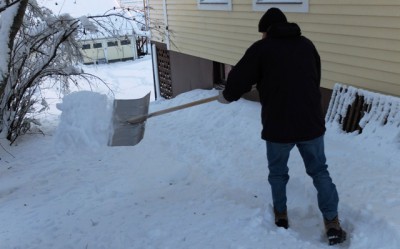
Suddenly, though people have not worried about it at all up to Christmas, when Hemvändare arrive it is absolutely essential that the snow on the roof is cleared away, before it causes a serious accident. Hemvändare, or, HemV to the rescue! They’re up on that roof, balancing precariously on the fire escape, shovelling off that snow.

The backyard, knee-deep in snow, as it is all winter, urgently needs clearing – for reasons that are not easily explained. HemV know how to work the snow clearing machines, and they’re off! Snow shooting in all directions and them occupied for the next two hours. Over the Christmas period you see them up and down the street, enjoying life as it used to be, when they were younger and had to live with snow – HemV are tough, they know the score, they can take it.

Then there are those old rusty vehicles, buried in snow at the end of the yard, haven’t been in use for over two months but now, over Christmas, they’re needed. They have to be dug out, the engines turned over, and if they aren’t working, they need HemV to get them working. They can fix it. The sound of revving engines echoes up and down Kiruna’s hills, exhaust fumes filling the cold Christmas air.

HemV are needed to get in the shopping, and they’re needed to walk the dogs. They’re needed to sort out that rubbish in the porch, and mend the broken stairs down to the basement. HemV – Your Town Needs You!

Then, after a few days, when HemV have fixed all the broken things, cleared all the snow away, and drunk the last cans of Lapin Kulta, they get back on a flight to Stockholm, pleased to be going home at last, proud to have been born in Kiruna, but relieved to be living somewhere else, where there’s no snow to clear and you can pay someone else to come and fix things that are broken.

And in Kiruna, locals breathe an even bigger sigh of relief, finally stop finding things to be done and at last just stretch out on the sofa and watch Netflix films. Peace returns.


The Christmas Spirit

Here at 68 degrees Posted on Tue, December 26, 2017 17:15:30

There were a couple of sticking points over whether Sweden would join the EU. One was the right to continue to sell ‘snus’ – Swedish mouth tobacco – and the other was the right to retain state-run alcohol shops. The rest of Europe is indifferent to the ‘snus’ habit, but people find it strangely restricting that in Sweden you can only buy your alcohol from the state-owned shop.

In the old days that would be at a high counter, whispering your sins to the frowning sales person, peering at the rows of bottles behind glass cases and trying to remember the code number for the particular bottle you wanted. Then hurriedly taking it away in a plain brown paper bag, stuffed guiltily into your shopping bag. Now the alcohol shops are like any other, shelves of their wares displayed for self-service and paid for on the way out at a till. Except that these shops aren’t open evenings and weekends after Saturday afternoon, never promote alcohol, or make special offers to tempt people to buy more.

There is no doubt that this system – and it is a system, the shop’s name is ‘System Bolaget’, known colloquially as ‘the system’ – results in you drinking less. Spontaneous drinking, if you haven’t stocked up, just can’t happen. Usually, when you feel like a bottle of wine, the shop is already shut. Or if it’s open, you can’t be bothered to slog up the hill to the shop, inevitably never situated conveniently round the corner.

Imagine, then, if you will, Saturday 23rd December. On this day in Kiruna, the alcohol shop is open until 2pm, and then it is shut. Until 27th December. This is a curiously enlivening thought.

It’s Christmas, and although Swedes don’t drink more than many other European nations, like everywhere else here in Kiruna they really don’t want to run dry over Christmas, especially with all those relatives up from Stockholm camped out in the spare room.

So does the threatened closure of the only source of alcohol in the town lead to a shop full of tense angry shoppers, pushing each other out of the way in their rush to reach the till before closing? Does it make your average Kiruna resident bad tempered? Let’s see.

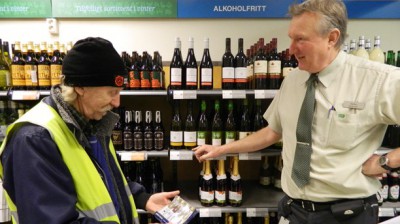
Stepping through the till gates people pause, look around hopefully to see who they might know. They will likely know someone. Or maybe most people. They’ll certainly know the staff – ‘how’s it going? busy yet? Happy Christmas!’

Someone asks a staff member about a particular type of Rioja, and decides, in the end, to have the Merlot. Or maybe, what about the selection of Californian reds this year?

But will it go well with the ham? It will? Not the way she cooks it!! Did you see what they wrote about him in the paper? Such a shame. You’re looking good though, wild nail colour!

Neighbours, brought closer together than they normally manage across their front yards, chat happily between the long shelves of lagers, leaning on their trollies and idly sifting through the enormous range of bottled beers. In the end they select the old favourites – it’ll be Finnish lager as usual – while asking after a parent’s recent heart attack, or explaining how they bought their son’s new dog.

Hemvändare – ‘home returners’ for Christmas – bump into one another, joyfully, while negotiating their way around the shelves of medium priced red wine.

Hello there! Great to see you again, how’s it all going? Norrköping? No, Västerås. Accountancy! hah! So sorry to hear that, how awful for you. Divorce goes through next month. Oh he’s at school now, plays in the junior football league. This one’s terrific – have you tried the white?

Brought together by a common purpose, people display concern, cooperation, helpfulness, amusement, curiosity, tact, and seasonal cheerfulness. So, while it may be true, in the words of Ian Anderson, that the Christmas spirit is ‘not what you drink’, you can still find it here, in the state alcohol shop, just before it closes for Christmas.

Who’d have thought it?

Pass us that bottle will you?


« PreviousNext »