Blog Image

Letters from 68 degrees, Kiruna

Blog at 68 degrees

What's happening here at 68 degrees, a bed and breakfast in Kiruna.

web page: www.68degrees.se

Murder most foul…

Here at 68 degrees Posted on Sun, February 07, 2016 20:16:46

Crime isn’t big in Kiruna. There is a police station but I’ve never seen a policeman. The police station is very visible in the way that a burglar alarm might be, and I suspect it isn’t really connected.

So imagine my surprise when, out for an evening run in the downtown industrial area, I was overtaken by a blue-light-flashing police car. I wondered if I was being pulled over for running too slow, or possibly for running in a faulty vehicle with insufficient lights, or maybe I was to be breathalysed after being spotted wobbling in the street.

Then I noticed the police car wasn’t stopping me but was forcing a car off the road right in front of me. The two cars ground to a halt and I wondered what would happen next. Rather than keep jogging through the middle of all this – which was tempting, I’ll admit, because I really wanted to know what was going on – I made the decision to cross the road and run on ahead – after all, I could be hit in the crossfire.

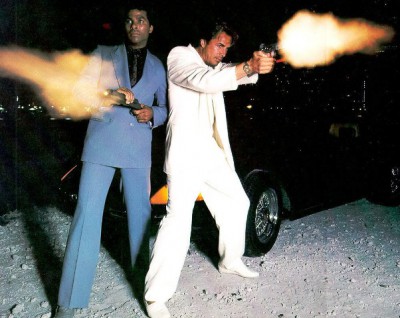
Only this was Kiruna, not an episode of ‘Miami Vice’. The most likely offence was underage driving, Why else drive through an industrial area at night? Kiruna allows teenagers to drive slow tractors and many people convert cars into these so they can drive them before they’re 16. It must be very tempting to borrow your parents’ car if your tractor breaks down – who’s going to notice in Kiruna? Sadly for this driver he came across probably the only police car to drive through town in the last six months. His life is clearly blighted by bad luck.

Criminal activity in Kiruna is infrequent, and generally limited to the tourist industry – selling ‘Northern Lights Tours’ for instance.

We have to explain to guests that the reason we keep our front door locked is not because we’re afraid of burglary but because it’s normal here for people to walk into a house without knocking. We’re told that when you go away you should leave your outdoor broom leaning against the door so people don’t waste time and energy climbing up the steps to the door. This isn’t a society that expects crime.

So it can come as a bit of a shock when we suspect that a guest is considering committing some kind of crime. We regard the role of running a bed and breakfast as a holy order, bringing with it a requirement for absolute confidence when a guest unburdens themselves to us in the confessional downstairs hallway. They do this from time to time. I don’t know if it’s the cold temperatures, or the wild landscape, or the northern lights, but sometimes people open up and tell you things, and you just can’t stop them. They’ve never in their entire lives eaten reindeer meat. They didn’t know you can’t make a snowman this far north. They used to think that penguins lived in the arctic. Or maybe, they confess that they’re wearing cotton underwear. Yes the confessions can be quite shocking.

It’s very important for us to remember that there are cultural differences and what might appear criminal to us might be a normal occurrence where the guest comes from. This week a guest actually admitted that he was planning a murder. It was hard to know how to respond. Should we tell the police? Or was he just saying it, as a figure of speech, and not really intending to do it? We couldn’t tell.

He was sitting on the stairs in our confessional hallway, lacing up his boots after a very happy two days with us. He and his friend had been lucky enough to see the northern lights, they’d done a good sled dog tour, experienced a snowstorm, and learnt a little too much about Kiruna’s night life. So we weren’t expecting it. Then it suddenly came out; their flight wasn’t until 1pm, and so they had some time to kill.

There, it had come out, just like that. Clear, premeditated murder was the plan and as people who had witnessed the statement didn’t that make us accessories to the act?

Then I remembered; where he came from this might be perfectly normal. Treasure the moments you have in Kiruna, I wanted to say, and just don’t do it. No-one here feels the need to kill time.

The two of them thanked us for their stay and left. I like to think they didn’t follow through with their plan. We decided not to call the police, and anyway, if we had we probably wouldn’t have been connected.
Ghost road

Here at 68 degrees Posted on Tue, February 02, 2016 19:30:59

I like that history doesn’t get covered up here. When things reach their natural – or unnatural – end, they stay there.

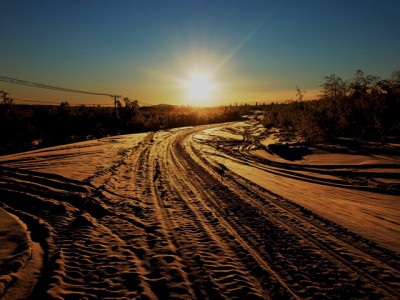
One of Kiruna’s four roads out of town (the road to Nikkaluokta, and one of the two roads out of town that’s a dead end) has been closed off. I suppose you’d say it’s reached a rather unnatural end. There was nothing wrong with it, but it’s too near the mining area and the land will become unstable. A new road has been built a kilometre away, linking up with the old road behind the mine where there’s no threat of subsidence.

The old road is closed off to traffic. Freed from the tyranny of the car, it’s opened up to everyone else. I watched a fox shoot along it, a flash of red brown flying through white, fast as a car but quieter, more mysterious.

Less quiet and mysterious, snow scooters can sometimes travel this way. These noisy, smelly machines do serve the useful purpose of flattening newly fallen snow making it possible to walk on, so the road has also opened up to walkers and runners. Or at least to one walker and runner – I haven’t met anyone else on it yet.

I know the road so well from a car but this is the first time I’ve experienced it at first hand, beyond the car window. I have to resist the temptation to look behind me all the time, to see if I’m in the way of a passing car. There are just the ghosts of old cars now. It’s snow-covered, very quiet, very empty.

It’s clearly still a road though. If it were somewhere else it would soon become something else – a supermarket, a block of flats, or another road even – but here the world has just packed up and moved on and left it – it’s the old road to Nikkaluokta and it will be that for the foreseeable future. It’s returning to the landscape it came from, only very very slowly.

The view of Kiruna town from the road is brilliant – you can see it from one end to the other, the church and town hall clock tower standing in the skyline next to the slope of Luossavaara, the companion hill facing the mine. In a car it was hard to enjoy it, since there was only one place to stop and admire it. Now, as a walker, you can see it at different heights and different angles and let your eye follow identifiable parts of the town.

As I’m running I listen for the muffled stirrings of animals and birds in the bushes. Mostly these are imagined, but that’s good enough for me. Mainly I hear the snow crunching beneath me at every step, the sound becoming more hollow as the road turns to a colder direction, more softly crunching as it turns back in the direction of the sun. The journey is much longer and more challenging without a car. Every turn in the road is a milestone of sorts, and as twilight begins to bring darkness I’m aware I didn’t bring a phone, there’s no-one here, and there won’t be anyone passing by. Still I push on to the next bend, just to see how it feels. It feels joyous.


Snow shovelling – a killer?

Here at 68 degrees Posted on Tue, January 26, 2016 22:30:09

Workers here (that’s us!) downed snow shovelling tools this week after reading in the papers that it’s dangerous for people over the age of 50. We read that this week many people in New York and Pennsylvania have had heart attacks and died as a result.

Snow shovelling – a killer. Really??

We read on. Apparently there are many things about it that puts pressure on the heart. If – an American doctor writes – you’re over 60 (and we are), and have a build-up of snow outside your house, the best thing to do is wait until someone poor enough to need the money knocks on the door and offers to do it for you (provided they aren’t over 60 of course).

We waited, but no-one is poor enough to want to do that here. So we read on.

We know it can be a strenuous activity. A problem for many people in the US it seems is that for them it’s a once-every-two-years activity, so they aren’t well prepared. For us it can be a daily activity and as the season builds up so does our fitness for the task.

Another potential problem is that snow shovelling is done in cold temperatures which is when the arteries narrow, increasing blood pressure. So the advice is, don’t do strenuous activities in cold weather. You couldn’t take that seriously here – you’d be putting your feet up for eight months of the year.

They go further: it’s better, they say, not to shovel snow while the snow is falling because then it is colder, so they advise that you wait until it stops.

So, they want you to wait until the snow is piled up high outside your door before you try and move it? And they think it’s better to remove snow when it’s warmer, when the snow is wetter and heavier?

They describe the mechanics of snow shovelling as especially demanding because of the amount of arm work above shoulder height, stiff leg work, breath-holding exertion, and back-breaking bending.

Intrigued by this description, we watched a video of New Yorkers snow shovelling and found it hard to recognise the activity. We saw people digging very narrow channels, scraping every centimetre off the pavement, through deep snow, with a shovel, or even with a spade. (A spade – that is, a heavy iron device which is a weight to lift even before you put snow on it.) Then they are bending over, picking up a heavy load, and chucking it away high above them.

No, no, no, no.

People of the US, you’re not doing this right. Don’t wait until you can’t get out the doorway before you start to shovel! Don’t move the snow when it’s already melting and heavy! Don’t use a spade to lift (a spade that already weighs a lot before you pick up the snow) and if you use a shovel, don’t lift it anyway!

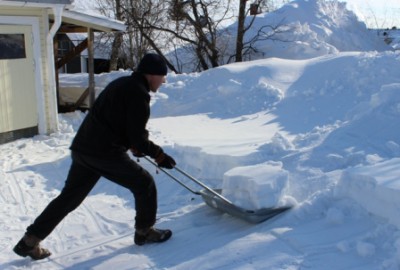
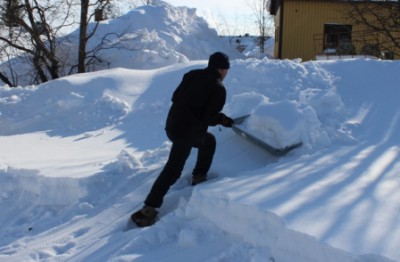
You need the right tool for the job; that’s a sled, a very wide, light aluminium plate with sides and back that you push along the ground using the weight of the body, not the arms. You empty it of snow by tipping it forward or sliding it ahead of you.

You also need to leave some layers of that slid-ey snow on the ground for the sled to run on, so you aren’t picking up the weight of the snow yourself – so it’s no use scraping it up, all clean and tidy, to impress the neighbours. Using a sled you won’t be able to make a deep narrow channel with the face of the Eiger carved on either side like we’ve seen in all the pictures, and you won’t want to wait until the mountain is formed before you start making a path. The sled will make a soft wide path, which creates less of a photo opportunity but is a lot more useful in the long run.

When you start you might need to use a smaller shovel (a light one) to carve out a starting point. Or you might need to start from the other end (the road, say) and work your way in and out, removing snow very slowly, bit by bit, by pushing the sled or pulling it backwards. Either way you’ll need to be patient and regard all the walking to and fro as a meditative exercise rather than a dash to the finishing line.

It’s an art, snow shovelling, not a competition. It’s good to remember this if you want to avoid that heart attack. I’m sure these days it’s also a good activity to develop ‘mindfulness’.

Your awareness might be so highly developed once you try it this way that you begin to wonder whether you really need to shovel at all. After all, it is possible to walk through snow, and if it’s wet and compacted you could even walk on top of it and survive to tell the tale.

And if you don’t like the idea of doing that either, you can always stay at home and just wait for it all to melt – which is a luxury option we may dream of, but don’t have here.


A good year for mallows

Here at 68 degrees Posted on Wed, January 20, 2016 16:04:25

The climate this far north of the arctic circle isn’t suitable for growing very much. In the summer there’s a good rhubarb harvest – locals tend to grow it for its appearance, rather than its taste – and we’re blessed with many wild berries out in the fjäll areas. There isn’t much else grown around here though. In the winter production focuses mainly on produce which is white, flaky, icy, or powdery.

Some kinds of snow tinsel grow well in mid-winter conditions here. After a period of slight humidity, snowfall, and then sudden intense cold, this kind of tinsel grows readily on the trees. We try not to disturb it until February when we collect it in large wicker baskets, pack it up carefully in frozen containers, and then sell it as a tree decoration for Christmas next year.

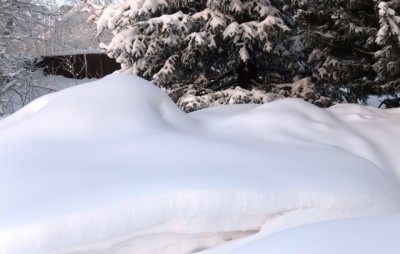
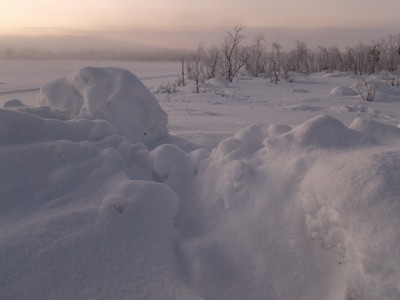
It’s also been a good year for snow mallows. These benefit from cold temperatures, heavy snowfall, and strong circular winds. Every year we set aside an area of land especially for them and they don’t need much encouragement to get going.

The snow mallow resembles a marshmallow (hence the name), only in this part of the world they’re much larger, softer, more sumptuous. You begin to see their swirly peaks pushing up early in January and then they continue to spread and grow for several weeks before we harvest them towards the end of the month.

Snow mallows grow wild in large numbers outside the town, where they’re usually left to grow undisturbed and can spread out to over 20 metres before shrinking again and dissolving in the warmer weather.

Snow mallows have diverse uses in cooking and baking, but we use them for cake decoration mainly. (See following recipe.)

Mallow Surprise

Take two smooth, rolling hills,

and smother in layers of soft white snow,

folding gently until stiff peaks form.

Allow the mixture to marshmallow out, slowly.

Sprinkle with birch twigs and sticky pine, and chill

under a dark and pulsing sky.

Freeze.

Cook a ball of gas, seven parts hydrogen

to three parts helium, heat to sixteen million

degrees, and reduce, to a cerise and tangerine sauce.

Pour in thick syrupy dollops, and serve

before the hills melt.


Sunday morning

Here at 68 degrees Posted on Mon, January 18, 2016 16:47:59

Yesterday snow fell thick and fast, and it did it while we were asleep. It was Sunday morning – always a good excuse for the snow ploughs not to come out.

To be fair, on a morning like that the ploughs have a lot to do, and we know we’re bottom of their list, being a house at the far end of a small side street. We were snowed in, so it could’ve been time to stoke up the fire and enjoy the excuse for a lazy day. Only we were expecting guests, in a car. And we were the ones who had recommended they rent a car, assuring them that driving here is easy. Shit.

Our neighbours had understood the seriousness of the situation in the road and not wanting to miss out on their Sunday outings had already begun to clear away some of the snow. But being at the top we were dependent on everyone doing their bit along the way. We decided it was safer to instruct our guests to come in from the other end – strictly speaking a footpath not a road.

We sent them a message, trying not to alarm them too much (‘you’ve just arrived in Kiruna to pick up your car and you won’t be able to drive it up our street’), and we started shovelling. We couldn’t wait for the snow plough – it might not come until tomorrow – so we got over the feeling of injustice and just got on with it. We piled up some of the snow in the middle of the road in the other direction, blocking the usual road approach to the house. We’d instructed guests to arrive at a specific time, fearing that further snowfall might otherwise mean we had to do it twice.

We should have known what would happen. Our guests never got our messages and so came from the usual road direction, not the way we had cleared. Although they did manage to drive up the street (by this time neighbours had cleared enough of the snow away), when they were within spitting distance of us they faced the pile of snow we’d created ourselves, blocking them from reaching us. They got out their car and we greeted each other across a pile of snow. So then we had to shovel that away again to let them through.

As we turned to go into the house I saw the waving antenna of a snow plough bearing down on us, leaping spritely through the cleared area of snow we’d just laboured to create. It was if he’d been waiting around the corner until we’d cleared it for him. I waved my fist at the driver and thought he might see the funny side of it. We couldn’t see his face until he passed by, but he wasn’t smiling. ‘Just as well,’ said Rolf.


Negative spaces

Here at 68 degrees Posted on Sat, January 16, 2016 00:09:48

On the edge of Kiruna we can see two huge cranes silhouetted in the sky. They hang limply above the site for the new town of Kiruna, like out-of-work gods of creation, hanging around on street corners, hoping for a lucky break. They mark the site of ‘the new Kiruna’, where – the council insist – work is full speed ahead.

It’s true there are a few new, almost completed, building projects in Kiruna – there are some new flats, some new accommodation for elderly people, and a youth sports facility – but none of them are on the site of the new town. The mining company has organised the demolition of several blocks of flats, and the repositioning of the road to Nikkaluokta, but none of this can be described as building the new town.

On the local council’s website is a list of ‘milestones’ for ‘the new Kiruna’. It’s a long list, but most of the achievements are projects elsewhere on the edges of the old Kiruna. Reading through the whole long list, the only thing I could find that’s anything to do with building the new town is that the ground on the site has been ‘broken up’.

Basically, they’ve dug some holes. Kiruna’s good at making holes, and is currently sinking into one.

It’s not impressive, but is consistent with my observations last year that the council is focussing on the ‘negative space’ principle – in the belief that if we are encouraged to focus on the spaces we might then be able to imagine the town that ought to be in between them.

Our comments are invited on plans for a new town park – a park in the centre of a town which doesn’t exist. It’s an interesting concept.

The sky’s the limit of course (this really is blue-sky thinking). Without a town to restrict it, the park can be any shape or dimension. Like the children’s game, ‘create your own country’. First you draw your country, then you decide on its landscape, its coastline, its vegetation, its buildings, even its inhabitants. Let your imagination go wild.

Sadly they haven’t. The proposals for the new town park – which after all can only exist in someone’s vivid imagination – display a dire lack of inspiration. We are asked to comment on the proposals, and I wonder if anyone has, and if they have I wonder if their responses are printable.

I need only tell you about one proposal, to make my point. Let’s not focus on the ‘karaoke area’, though there is doubtless a lot that can be said about that – and none of it good. I will just mention the proposal for an area to be called, ‘The Snow Mound’. That is a space where there will be, presumably, a large pile of snow. Just like all the piles of snow on every street corner, outside every house, and at the back of everyone’s building, in the whole of Kiruna, for at least six months of the year. These ideas come from a firm of architects based in southern Sweden, so maybe, for them, this would be an exciting idea. Even an imaginative idea.

Something is going very wrong here.


Knut over yet

Here at 68 degrees Posted on Sun, January 10, 2016 17:52:07

The new year has been seen in, ‘twelfth night’ (the day after the twelfth night of Christmas, a public holiday here) has been and gone. Kiruna has emptied of ‘homecomers’ who arrived to join their families at Christmas. People have gone back to work after the long break – or if they haven’t, they will tomorrow.

And yet it’s still Christmas. It lingers unfashionably here. Officially until the 13th, ‘Knut’s day’. By tradition on that day Knut chases out all the spirits lurking in corners, spirits that are no longer useful to us. Knut’s not the soft cuddly figure that brought the season in – he’s sharp and energetic, and he urges us to hurl our Christmas trees out of the window. This tradition became a hazard when people began to live more in flats, so now it’s acceptable to bring the trees out the door.

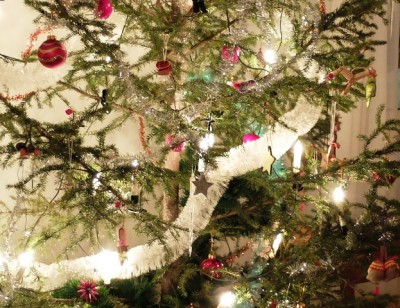
Poor tree, I didn’t much like it this year – it’s a misshapen, bare specimen, bought in desperation ‘off the back of a lorry’ – but it’s become a friend. Every time we threaten it with removal it perks up and refuses to drop any more needles.

Daylight returned on twelfth night but it’s still dark most of the day, still midwinter. Temperatures have risen to a comfortable minus 10 (after minus 37 degrees in the last week) and soft, gentle flakes are falling from a dark sky. Coloured strings of lights outside are buried deep in the snow and glimmer blue and pink through white layers of flakes. It feels as if we get a bonus week of Christmas here, after the rush is over.

It’s Sunday afternoon, and there’s no traffic. Snowflakes settle and out of the window and nothing seems to move. It’s calm and we can take the time to appreciate the season. I listen to some music, light a candle, look at the tree. Others may be keen to move on but it’s still three days before the spirit of Knut takes over and I’m in no hurry.


‘- but it’s so cold!’

Here at 68 degrees Posted on Thu, January 07, 2016 16:59:49

You can’t help but be surprised, astonished even, when people return from a visit to the ice hotel and complain, ‘but it was so cold!’

Yes. It’s an Ice Hotel. Made of ice. Ice is cold.

It seems that sometimes people just aren’t prepared for the reality – the glamorous idea of the far north doesn’t always come with an understanding of its challenges or with a willingness to adapt to them.

The need to adapt all the time, not have things so routine and predictable, is the appeal for us, but for visitors hopping in and out for a couple of days it can be an unwelcome demand. Some guests travel within their own shell, bringing food from home to cook (please note, cooking food is not something we allow), turning the electric radiators up to 30 degrees, and walking around in their rooms in their underwear, reading copies of ‘Vogue’ magazine. However, they do still have to encounter some discomfort when they go outside our house.

In fact it’s been a particularly challenging week for all of us at ’68 degrees’. Opening the front door has invited swathes of cold air to swirl into the house, like an indoor version of the northern lights dancing round the hallway. It’s been like opening a giant freezer warehouse door and looking for the fish packets – only too cold to actually look for the packets so you just shut the door as quickly as possible.

For a couple of days the temperatures have been hovering around minus 37 degrees C, and the sun (yes, the sun has just started peeping over our due south horizon, lolling along it and then falling back down) is a low, hovering ball of red in a haze of ice crystals. Our visitors have come from areas where the temperature is in plus degrees what it is here in minus. It must be hard to comprehend.

Our wooden house was built in the 1920s, but upgraded many times since with all the insulation and triple glazing that is the norm here, but once temperatures fall below minus 25 its systems start to creak a bit. The warm air pump becomes a lot less efficient, and at minus 30 degrees has a tendency to switch itself off in protest. The electric radiators still work of course (and upstairs, in the warmest part of the house, if they’ve been turned up to 30 degrees you can still sip a pina colada in a bikini in your bedroom and imagine you’re on a beach in St Lucia or the Maldives). Our main living room has an efficient ‘kakelugn’, a kind of wood burner radiator. Still, with minus 37 degrees tapping at our window panes and creeping through the door every time someone goes in and out, the house is struggling to maintain a consistently warm temperature, and there are problems.

Ice on the inside of the windows for instance, even in a warm room. Almost inevitable, I gather. It’s humidity in the house with people breathing and, despite triple glazing, very cold glass on the outside and slightly cold glass on the inside. The lower inside of the window is least exposed to heat and water gathers there and eventually turns to ice. We live with it.

We couldn’t resist going out yesterday – and we went out of town to where it was coldest – minus 39 degrees, At that temperature the skies are beautiful colours, the cold deepening the pinks and blues to more mysterious shades of mauve and cerise. Then the snow, all its crystals separated so each one sparkling on the landscape. Ice crystals in the air, carrying the colours as they hover just above the land. When you walk outside your body feels it as a joy for the first few minutes, an exhilarating pleasure for the next ten minutes, a slight discomfort for the following ten minutes, and within 30 minutes it starts to be a bit painful. Only on the face, if you’re wearing all the right clothes, but the skin definitely objects. Hair falling around your face goes prematurely grey as the ice crystals attach to it. If you stop moving for a minute your feet begin to ache. It’s time to get back in the car and warm up.

Ah yes, the car – it’s Korean, and feels the need to warn us every time the temperature drops below plus 4 degrees, which it does most of the time you start the car here. The car also has a pain level. It doesn’t refuse to work, but in these temperatures it complains it has to work a bit hard. Yes yes, well we’re all struggling a little here, get used to it.

Almost everyone manages, carries on as normal. People go to work, go shopping, take the dog out. If you have a choice, you wouldn’t go skiing, go out on a snow scooter or drive a husky dog sled, but other than that you don’t need to change your life significantly.

So you can’t help but be surprised when you read that SJ, the rail company, have decided to cancel the trains because of the cold. Not because they are breaking down (why would they?) but because, they say, if they did break down it might be dangerous for the passengers. And for the same reason they can’t provide a replacement bus service, even though other buses are still running, our car works ok, and people manage perfectly well going about their daily business.

‘But,’ – wail the rail company – ‘it’s so cold!’

Yes, it’s the arctic. It gets cold here. Every year.


Running to work

Here at 68 degrees Posted on Mon, January 04, 2016 18:22:44

In the local paper there are reports of rumblings in the dark, and disembodied voices heard in some of Kiruna’s old wooden houses. A group of people have got together to collect stories of local hauntings. I’m not sure why – perhaps they just want to believe it, or perhaps they think it will be of interest to other people and might be a good business idea.

I think Kiruna is full of old ghosts. So much of its past is still there, and it’s packed in a lot of history into its 100 or so years. You can smell the wild west frontier town atmosphere that must have pervaded the whole place back in the early 1900s, when the railway first came to town.

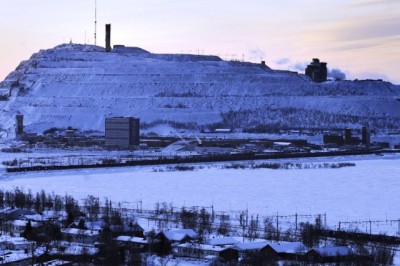
Yesterday I ran along a path that begins at the old railway station and ends up at the mine. Out on this path you get a great view of Kiruna’s skyline, and the two former mountains of Luossavaara and Kirunavaara, the names that have formed the mining company’s name – LKAB, ‘Luossavaara-Kirunavaara Aktie Bolaget’. The path circles around the collapsed ground, giving you views across it to the mine and to Kirunavaara.

One area of this collapsed ground is known as ‘Ön’, or ‘Island’. It was the first part of town to be occupied, a sort of shanty town when the mine first began. This bit of land actually collapsed long ago, long before all the razzmatazz around the current threat to the town. There were houses, storage buildings, roads, and a tram line crossing the area – bringing workers from further out in town out to the mine. Now it’s an even wider area that has collapsed, taking in newer roads and byways which have disappeared back into the landscape.

Workers who came here in the ’20s and ’30s had to be persuaded to come with offers of good salaries and a modern tram line, introduced as early as 1907, to bring them straight into the mine. Working in the mine was hard physical work so ensuring your workers arrived full of energy and raring to go must have been a benefit to the mining company.

Looking out across the area of ‘Ön’ I had the feeling, while I was running along that path, that there was a tram of workers rattling across the land beside me. The men inside were looking out of the windows, and could see me, a lone figure on the path. They were wondering why I was taking such a long route, when the tram line goes straight there. They were wondering why someone would be running that way, in the snow – a lone female figure, in odd clothing, at night.

I was wondering what it was like to be a mine worker in the 1920s, how it felt at the start of your working day as you approached the mine, which in those days was all above ground. They kept looking out at me, the mine workers, as their tram pulled up at the foot of Kirunavaara, and then they all got out of the tram and walked towards the mine entrance for the start of their shift. I reached the entrance soon after them, and then turned my back on them and ran back towards the town.


Starting the year with a whimper

Here at 68 degrees Posted on Fri, January 01, 2016 17:50:30

We’re standing out on the frozen river at midnight, with a small crowd of people who’ve all splashed out on a lavish New Year’s Eve at the Ice Hotel. Everyone seems strangely subdued. We’re watching two men in dinner jackets, carrying brooms and wearing antlers, walking around on a stage. We’re trying to work out what the men are doing, and we’re trying to work out why we’re standing there watching them. We’re told this is a very important local ritual. Some kind of joke, obviously, only no-one is laughing.

Then a tractor arrives with (we’re told) the Ice King and Queen. But the brief hope that something entertaining might happen is dashed when they start disagreeing with the men with brooms over something (we’re not sure what) and join them walking aimlessly around the stage, backwards and forwards, while we all watch.

We’re losing the will to live. Aren’t we supposed to be celebrating something?

Then it’s midnight, and the ice figures ‘2105’ are smashed with a broom. Someone lets off some fireworks for a few minutes, each of them heavily laden with expectation and disappointment, and then, that’s it. Is this really the best the Ice Hotel can do?

We’ve been here at this time before and quirkiness usually wins over boredom, but this year the event has zero charm and minus zero entertainment value. The new year has begun with a very long drawn-out and painful whimper. It feels as if we’re in a kind of theme park, only ‘on ice’. At breakfast tomorrow our guests will struggle to be polite about it all.

We escape to a quiet area just a few minutes away, outside the old village church. Lying on my back in the middle of the river, I stare up at the black sky. The aurora are active but hidden by clouds. The snow is cold but soft underneath me, and I try to remember that I’m actually lying on a frozen river. A real river, turned to ice by the elements, covered in snow by the elements. Underneath the snow and ice are deep blue cracks snaking down to the pebbly river bed, cascading bubbles of trapped air trailing through the ice, frozen green algae, pink shimmering fish, and huge soft-contoured rocks that have been sculpted by centuries of water and ice just passing by.


Flying in for Christmas

Here at 68 degrees Posted on Mon, December 21, 2015 11:15:17

I read in the local newspaper that one thousand eight hundred people from England are flying to a town 185 kilometres south east of Kiruna this month to visit Father Christmas. I hope their expectations are not set too high or disappointments are in store. Flying reindeer are hard to see, even this far north.

Generally visitors to this part of the world know what they want to experience. They want the husky dog experience (jingling sleds gliding through the snow, bright-eyed dogs yapping in the misty air); the snow mobile experience (roaring across the ice-covered lakes and screaming to a stop in a cloud of petrol fumes); the northern lights experience (lying on their backs in a dark landscape watching technicolour showers of light moving rapidly across a starry sky). They want it just like they’ve seen on TV, and nothing else will really do. Funny that, because you’d think that having a new experience, something surprising – something you hadn’t been able to imagine before you went there – would be more valuable. But no, nothing is left to chance, the experience is pre-planned, pre-booked, and paid for in advance.

I was asked this week, by someone enquiring on the internet, whether, if she came to see the northern lights, she might think when she got here that it was an anti-climax and be disappointed. I didn’t know what to say. It depends, of course, on your expectations. If you book a tour you might be disappointed if the tour company don’t deliver on their promises, but how, I wondered, could the natural world ‘disappoint’? Because the northern lights aren’t colourful enough? Or don’t flash across the sky like you’ve seen in films? You put all your hopes into an expectation of something fake, an invention of photographers and the media, and then want me to tell you if you’ll be disappointed? The aurora aren’t a theme park light display.

I don’t always manage to convince visitors that this is the case. When the lights suddenly appear – as they do, when you’re least expecting them – I rush upstairs to inform guests that now is their chance to see them. But some people linger, have a shower, wonder which trousers to put on for the evening, and by the time they get out into the garden the lights are gone. Not to worry, they think – they’ve booked (and paid for) a ‘Northern Lights Tour’ the next day. So that’s alright then.

We walked into town today, hoping to get some of the feeling of Christmas at the local market. I looked forward to a cup of mulled wine, a sight of Father Christmas, and the opportunity to buy some pointless handcrafted items and a few pairs of woollen socks. When we got there the street stalls were empty and Santa wasn’t in his grotto. I don’t know whether we missed the market because we were too late, or because it didn’t happen at all, but it was a disappointment.

The church wasn’t providing anything seasonal either. The only Christmas event was some music in the local crematorium. Nothing very jolly there then, but at least – a friend commented – it would be warm.

With nothing else available to pander to our Christmas expectations, we decided to do a bit of shopping. Maybe mingling with happy shoppers would make us feel it was the season of good cheer. I hoped for a bit of hustle and bustle, but there was only piped music pouring out into Kiruna’s near-deserted shopping streets.

We went into one of Kiruna’s outdoor activities shops. We seemed to be the only customers, but then round the corner of the fly fishing apparatus, just past the guns display, I spotted Father Christmas. He was in the camping section, in full regalia – long beard, red coat, fur-lined hood – and carrying a small Christmas paper carrier bag. The staff were advising him on the merits of different makes of rucksack. It made my day.


SAD in Kiruna

Here at 68 degrees Posted on Sun, December 13, 2015 17:09:48

It was day three of no daylight in Kiruna. ‘What, now?’ our guests protested, noticing light through the window. I’d been explaining that ‘no daylight’ means no sun above the horizon but it doesn’t mean total darkness – just long, soft, lingering twilight hours surrounded by a thick crust of dense black.

Still, it’s enough to make one SAD, reading in the papers how many people suffer from this (Seasonal Affective Disorder). Down at 50 degrees latitude people suffer very badly from lack of daylight and are desperately popping vitamin D3 and buying up light boxes just to stay alive. And yet here at 68 degrees life goes on as normal, only darker. I haven’t noticed an outbreak of SAD, and I’ve nothing of that kind to report myself.

Why would this be? You can explain a bit by saying, well we have lots of snow up here so everything looks so much more cheerful, and the snow reflects and creates more light. But you can’t get round the simple facts: Kiruna zero hours daylight, Stockholm 6 hours, London 8 hours. Now if SAD really is about lack of daylight in Kiruna by now we ought to be suicidal.

The truth is, I like it when it gets dark. I feel a calm descend around me, permission to look inwards, a reason to sit quietly in a private space and be content with the small pleasures of life – music, candles, food, conversation. I know it won’t be forever. The darkness is given to us for a small space of time – only a month – and is an expected part of the rhythm of the year.

Our cities are year-round cities, protected environments with shopping areas the same in any weather and at any time of the year, and houses kept at the same temperature regardless of the season. We can be sitting outside cafés with overhead heating in November and believe it’s really May. We can cross town in January without a jacket, keeping near arcades and hopping on public transport. Throw a bit of climate change into the mixture and the seasons really are hard to notice. Except that, if you spend any time beyond electric light, and you live away from the equator, you will notice decreasing daylight, and there’s nothing at all you can do to disguise that. This can be a blow, if you have an expectation of the year-round city.

It’s easier to accept the darkness here, where it’s so extreme – and I think that’s why we don’t have SAD. Our expectations are met, not confounded.

Today, on the third official day of no daylight, I walked into town in the middle of the day. I wanted to enjoy the glow of the soft, monochromatic twilight, before returning home in the blackness to coffee and cake. I noticed that the street looked more colourful than usual. There was a pillar of reflected sunlight shooting up from the southern horizon. As I got to the top of the hill there was no mistaking the bright orange hub of the sun clearly visible above the horizon, and it was not supposed to be there.

I felt cheated. Disappointed. Sad even. I realised it was visible because it was at its highest point and I was up a hill. I must say, as it sank back below the horizon after only a few minutes I felt some relief. Any more of that and I would have to go out and buy a dark box.


« PreviousNext »